Categories
Fall New Harvest

Harvest spotlight: Sorrel

Sorrel looks like spinach and tastes like lemons. Kids love its bright sour taste. It enlivens salads and smoothies, makes great pesto, and is famously eaten across Europe as a delicious soup (hot or cold) with potatoes and sour cream.

Sorrel soup variations:

French sorrel soup

Schav

Zupa szcczwiowa

Green borscht

Categories
Fall

Autumn dips

Here are three delicious (and beautiful!) dips for seasonal produce:

Chard-tahini dip

Swiss chard tahini dip
Seasonal ingredients: chard, sesame seeds (tahini), garlic

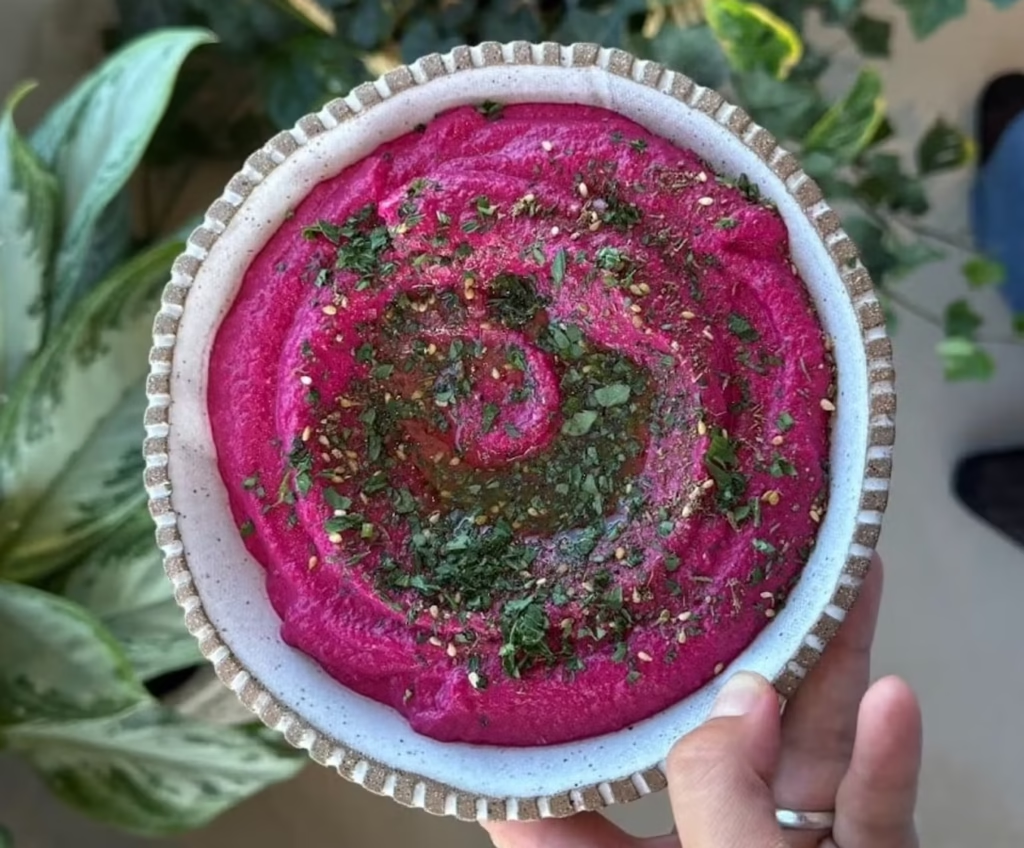
Beet hummus

Beet hummus
Seasonal ingredients: beets, chickpeas, sesame seeds (tahini), garlic

Pumpkin dip

Pumpkin dip
Seasonal ingredients: pumpkin
Categories
Fall

Seasonal eating!

Plate full of seasonal eating
Starting from the beverage, then moving clockwise around the plate: prickly pear natural soda pop; sauteed rainbow chard with green chile and sesame seeds; roasted butternut squash, sweet potato, carrot, and chickpeas with preserved lemon dressing; red chile grilled chicken from Wonky Waddles in Belen; tomato grits made from Santa Ana Pueblo white corn
Categories
Fall

World’s Easiest Tomato Paste

Fill two lined baking sheets with tomato halves, cut side up, about 8 to 10 pounds. Sprinkle with salt and drizzle with olive oil. Roast in the oven at 425F for 2 hours, turning the baking sheets halfway through.
YAAAAAAAAASSS! See those brown bits? That’s flavor!
Cram it all into a food mill atop a bowl. Grind until the skins left behind in the mill look “dry” and your arm feels like it’s gonna fall off.
Transfer the milled tomato paste into ice cube trays. A piping bag or ziptop bag with a corner cut off helps. Tap the trays on the counter gently so that the tomato paste settles. Freeze until solid.
As Emeril would say, “BAM!”
Categories
Fall

Operation: Add Greens To Everything

Farmer Jason says that adding chard to red chile stew makes it look like what Yoda ate while in exile in Dagobah.

It’s also really tasty.

Categories
Fall New Harvest

Harvest spotlight: Rainbow chard

Here in Central NM, rainbow chard grows almost year-round; growth slows only during the coldest winters…and sometimes it gets a little nibbled by grasshoppers at summer’s peak (but we’re ususally too distracted by the abundance of calabacitas, cucumbers, and basil to notice).

The leaves are mild in flavor and can be used in all of the same ways you might cook spinach. Try it in creamy cheesy “spinach” dip. Large chard leaves can be softened with boiling water and stuffed, similar to grape leaf dolmas or cabbage rolls. Greens love eggs: quiche, frittatas, scrambled, or crack some eggs directly into a pan of sauteed greens and let them poach. And then there are soups, stews, stir-fries, casseroles, pasta dishes, grain salads, enchiladas, quesadillas, pizza, smoothies, and more.

The stems are sweet and earthy, so don’t throw them away. How many recipes begin with the instructions to soften a diced onion and other seasonings in a pan? This is the time to add your diced chard stems as well.

Categories
Fall

No Dig Day

While today is Election Day in the US (please vote), it’s No Dig Day according to Charles Dowding in the UK. We’re enormous Charles Dowding fans, having several of his books on our bookshelf that we refer to frequently. The temperatures we see in Central NM from mid-October through mid-April closely mirror the temperatures seen during the same period at Dowding’s Homeacres, so we’re always looking to his books and YouTube channel for inspiration for what to grow during the cooler months of the year.

No Dig = No Till = Sheet Mulching = Lasagna Gardening = Back to Eden Gardening

It’s what we do at Rocket Punch Farm.

Categories
Fall

Why don’t you grow…?

While our 2027 food list is extensive, we don’t grow everything. Because that would be impossible: we’re only two people and we only have so much time, energy, and garden space. Everything we grow has been chosen for high productivity, nutritional density, culinary value, flavor, texture, appearance, and climate appropriateness.

Foods we don’t grow because they take up too much space: corn, large pumpkins, watermelon.

Foods we don’t grow because we can’t eat them: asparagus, okra, sunchokes, bulb onions, and bulb garlic. For onion/garlic flavors, we grow green onions, chives, garlic scapes, and Chinese toon…and we grow stridolo, which tastes a lot like asparagus.

Foods we don’t grow because of intense pest pressure and unfavorable climate: Brassica oleracea crops like heads of cabbage, Brussels sprouts, cauliflower, and broccoli. Instead, we grow Brassica rapa crops like bok choy, tatsoi, and turnips along with other green vegetables outside of the Brassicaceae family.

Foods we don’t grow because we just don’t like them (sorrynotsorry): spinach, kale, celery.

For green chile, eggs, dairy products, and locally raised meats, we support the hard work of our neighbors.

Categories
Fall

Ferments

We’re big fans of using homegrown and local foods to make fermented products for our own enjoyment.

Kimchi
Kimchi made with bok choy, carrots, radish, green onion, garlic scapes, and red chile
Green jalapeño hot sauce
Green jalapeño hot sauce, in progress
Probiotic soda
Probiotic soda made with prickly pear, using a “beet bug” for fermentation and carbonation.
Categories
Fall

Change is constant

Hello. Yes, we’re still here, still farming.

See, we started farming at the start of COVID–when everything got really weird–so we were selling directly to customers from home. And then we tried other people’s farmers markets, tried launching our own farmers market, and tried selling through an indoor farmers market that was open every day…until it closed its doors in June 2026.

Over the years, we’ve attracted a small following of passionate locavores who enjoy the boutique experience that only a microfarm can provide. Here in Central, NM you can grow and eat local food all year, just don’t expect fresh tomatoes in February. For a list of our 2027 foods, click here.

UPDATE: Nov 1, 2026

The following foods are available in limited amounts: tomatoes, carrots, beets (roots and greens), rainbow chard, sorrel, green onions, onion chives, garlic greens, mint, tarragon, lovage, salad burnet, oregano, sage, and thyme.

We expect to harvest daikon, turnips, and mustard greens along with other cold-hardy greens, root veggies, and herbs throughout the winter.

—

If our harvest list speaks to you, give us a call, text, or email. You will find our contact info here. Please note that we no longer use any social media platforms as the business operations of those companies deeply conflict with our ethics as regenerative farmers.